The Heavy Legacy of Vittori and Mennea: How a Method Built Around One Outlier Held Back Italian Sprinting
This article probably won’t sit well with everyone. But after years on the track, plenty of wrong training decisions, and one conversation that changed my career, I think it’s time to say it plainly: the Vittori-Mennea method, applied uncritically to generations of sprinters who were not Mennea, did more harm than good to Italian sprinting. Not out of anyone’s bad faith. Because of a methodological error at its core that propagated for decades.
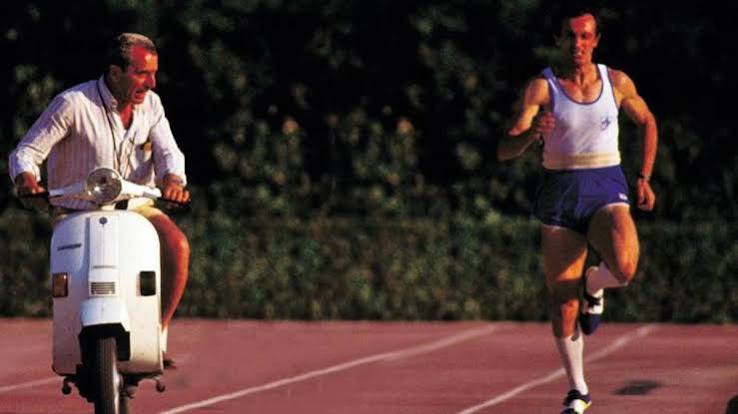
A phenomenon, not a method
Carlo Vittori was an extraordinary coach and Pietro Mennea an athlete completely off the scale. There’s no argument there. The problem isn’t the Vittori-Mennea pairing itself, it’s what happened afterward, when that training program, built around an athlete with recovery capacity and load tolerance completely outside the norm, was taken and replicated on ordinary athletes, with neuromuscular systems and recovery capacities nothing like his.
Mennea trained at extremely high volumes, medium-to-high intensity spread across a huge number of repetitions, day after day, practically without a break across the year. He could sustain that load because he was, simply, a biological and mental anomaly. The problem is that the method got codified, taught, exported… and so thousands of coaches across Italy started prescribing it to athletes who had nothing of Mennea in them except the desire to become him.
The predictable result: either you got injured, because the accumulated volume far exceeded your system’s recovery capacity, or you slid into overtraining, because quantity had completely displaced quality in the design of the session.
The conceptual error: training the wrong athlete
The real problem isn’t “too much volume” in the abstract. It’s that a training model designed for a single phenotype. Exceptional recovery capacity, off-the-charts tolerance to accumulated fatigue was generalized as if it were a universal principle of sprint training. An individual outlier’s characteristic got mistaken for a transferable methodological principle.
And sprinting, by its very nature, is the discipline where this error does the most damage. Performance requires the expression of maximal power in a single effort, not tolerance to repeated sub-maximal efforts. A high-volume, medium-to-high-intensity model trains exactly the wrong quality: resistance to accumulated fatigue, not peak power. It’s not “specific training”.
The session that opened my eyes
I still remember, in detail, the session that made me understand the mistake I’d fallen into: 60, 80, 100, 150 meters, with 10-15 minutes of recovery between each rep. I had never done a structured session like that before: huge recovery periods, very few reps, each one at maximum possible intensity.
What struck me wasn’t the absolute time. It was that, rep after rep, I was losing ground. I couldn’t maintain the same quality of output from the first rep to the last, despite full recovery. That was clear proof that my system wasn’t used to expressing maximal power in an isolated, repeated fashion, but it was used to “managing” accumulated sub-maximal loads.
That day I understood I had become very good at something that’s useless in an actual race.
The conversation with Jacques Riparelli
The person who really explained the “why” behind that session was Jacques Riparelli. I still remember that conversation. To me, at the time, he was a legend, one of the protagonists of Italian sprinting, and the fact that he took the time to come down to my level and calmly explain the principles of sprint training is something I still carry with me.
The concept, stripped to its core, is this: in sprinting, quality comes before quantity. Not high-volume sub-maximal reps, but very-low-volume maximal efforts, with full recovery between attempts. The exact opposite of the logic I had grown up on.
From that moment, the way I trained changed radically, and so did my results. I went from being one of the weakest in the acceleration phase to being one of the strongest, eventually reaching national finals in the 60m, a distance where I never imagined I’d be able to compete at a national level.
A change already underway
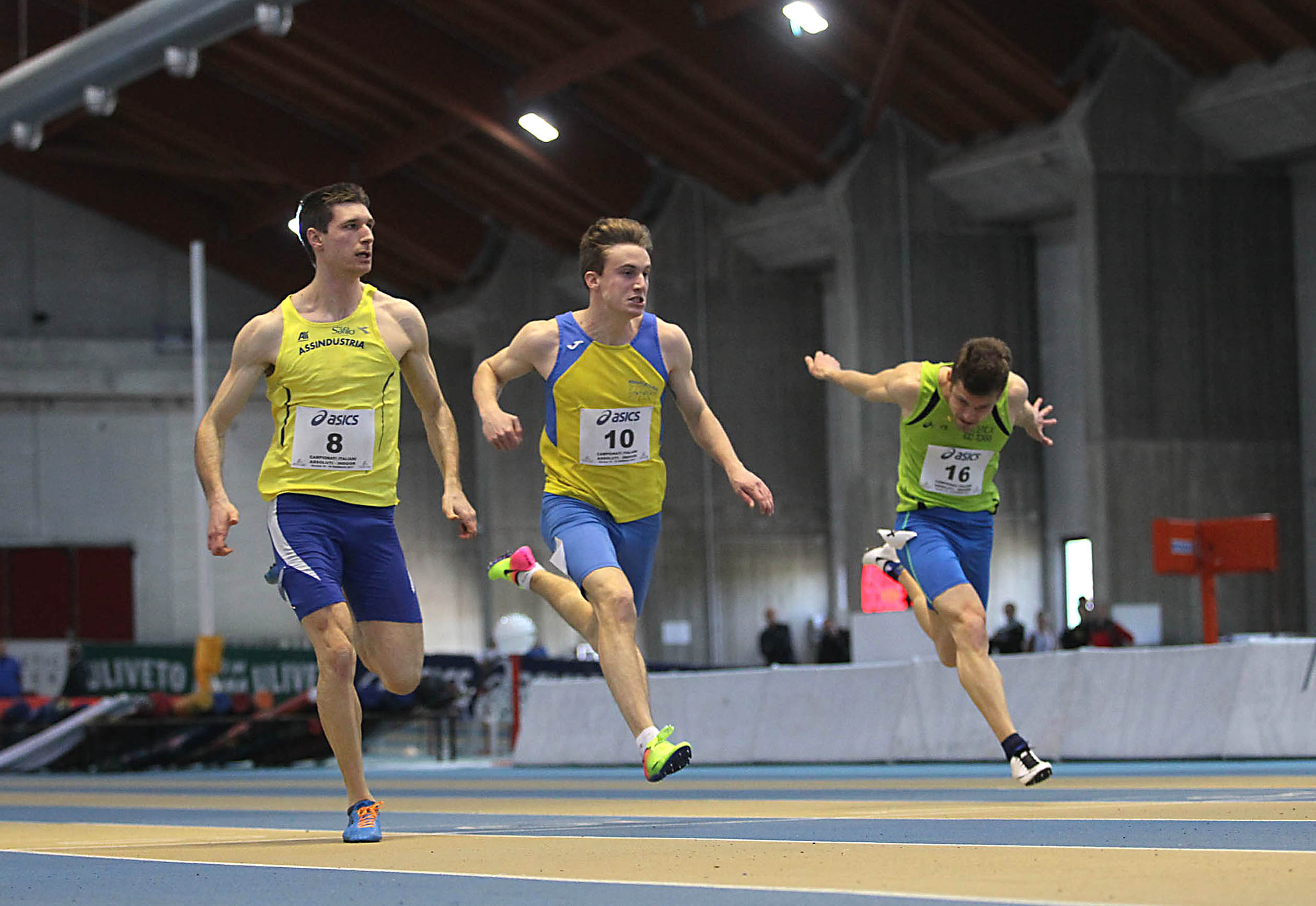
The good news is that things are changing, even if slowly. The high-volume model, a direct descendant of the Vittori-Mennea era, is a legacy that’s gradually fading in favor of more modern, more scientific training, built around individual specificity rather than the replication of a program designed for one irreplicable athlete.
People like Jacques Riparelli, protagonists of Italian sprinting through the 2010-2020 decade, played a central role in this paradigm shift: less volume, more quality, training calibrated to the athlete’s actual recovery capacity rather than the off-the-charts capacity of a singular phenomenon.
The lesson, for anyone coaching today
If there’s one principle I take from this experience, it’s this: no method, however extraordinary the results it once produced, is automatically transferable to another athlete. A training program shouldn’t be copied from a champion but it should be built around the recovery capacity, neuromuscular profile, and specific demands of the athlete in front of you.
A generational talent’s gift isn’t the volume he can sustain. It’s everything else. Confusing the two probably held back more than one generation of Italian sprinters and I don’t want it to hold back the next one too.
Lodovico Cortelazzo
Former national-team athlete. 15 years of training. Exercise science and engineering.
Fifteen years of training, eight at national level, give a specific kind of eye for what sport technology actually does versus what it claims to do. I combine a background in exercise science with hands-on engineering to build and analyse tools that are meant to work in the real world. If you are working on something in this space and want that perspective, reach out.
Work with me →